Producer-authorised organisation · Packaging EPR · Vietnam
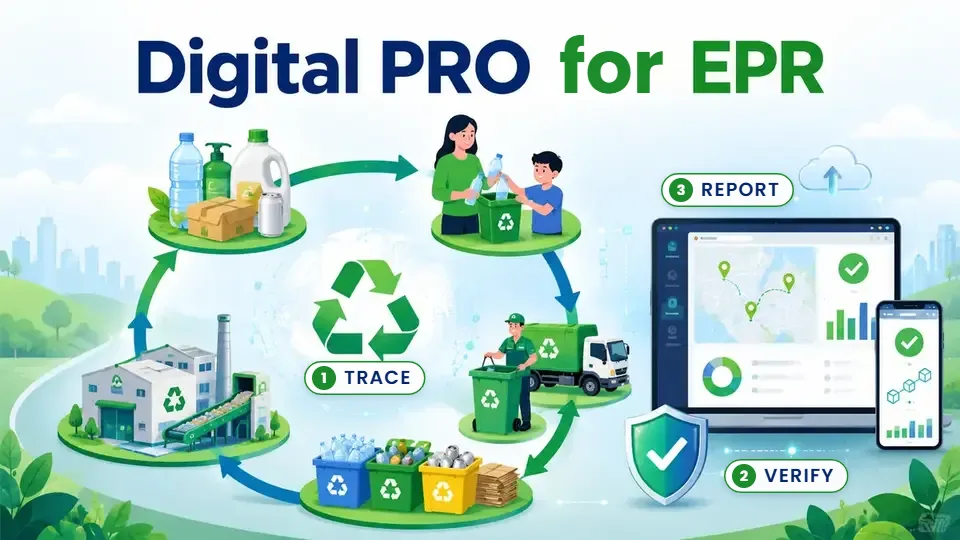
Digital PRO for EPR. Recycling evidence you can reconcile.
GRAC works with producers and brands to coordinate collection and recycling through partner networks, trace material batches and prepare supporting records for review.
Clients & implementation
partners





Figures reported by GRAC. Traced volumes are not the same as confirmed recycling results for a specific EPR obligation.
Three solutions · B2B
Choose how to work with GRAC.
EPR implementation services, a traceability platform or operations software — matched to your organisation’s needs.
01 · Digital PRO · EPR
Digital PRO for Packaging EPR
View EPR services02 · Platform · Traceability
Material Traceability
Explore the platform03 · Software · Management
Waste Management
View the software
01 / Packaging EPR implementation · Digital PRO
From collection to recycling evidence.
One point of coordination for packaging EPR — from the implementation approach to documentation backed by reconcilable records.
- Planning: review packaging data, material categories and quantities, and define the implementation approach.
- Coordination: organise collection and recycling through participating partners.
- Documentation: reconcile quantities, link supporting records and compile them by reporting period.
Implementation plan · Quantity data by status · Reconciliation report · Supporting documentation agreed under the contract.
Collected quantities, recycler receipts and confirmed recycling results are tracked separately. Which results can be used for EPR reporting is reviewed against the corresponding documentation.
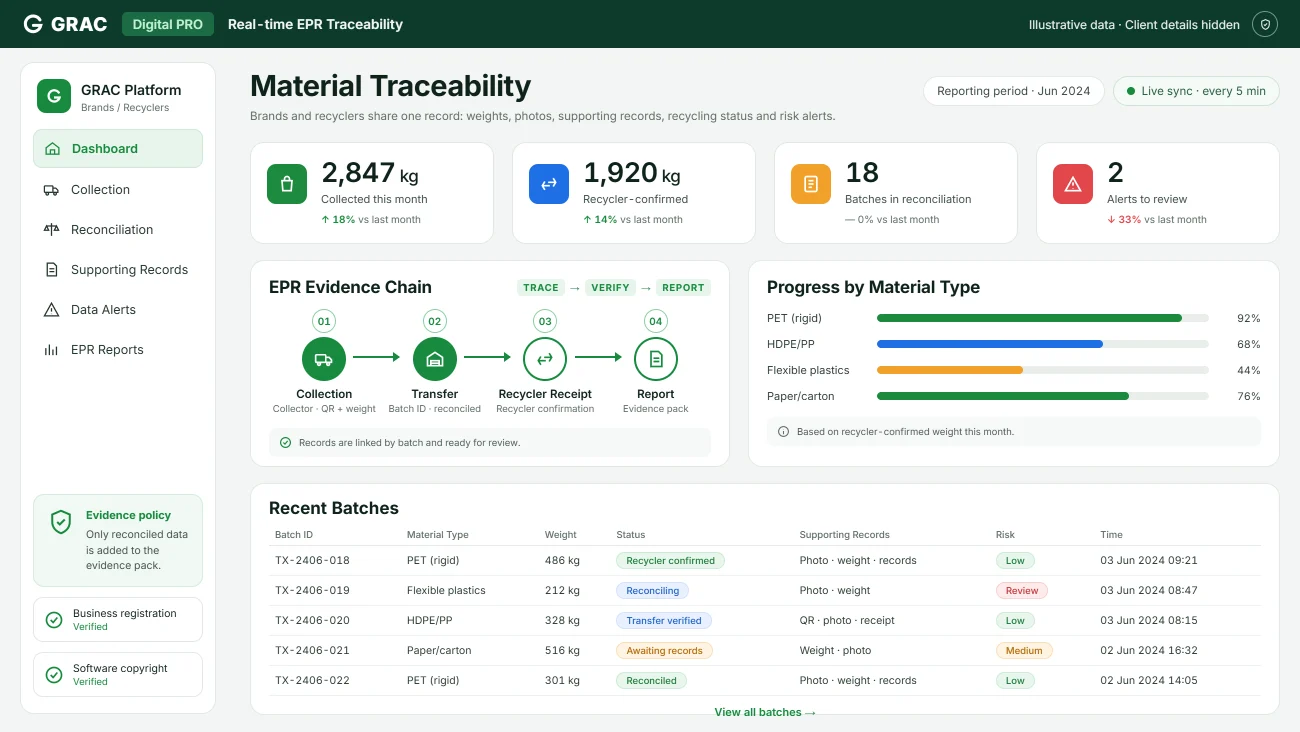
02 / Material Traceability Platform
Track material by batch.
Reconcile every handover.
For brands, collection facilities, recyclers and programme managers. A data layer that links transactions, quantities and documents across all parties, deployed on your existing network.
Request a traceability demo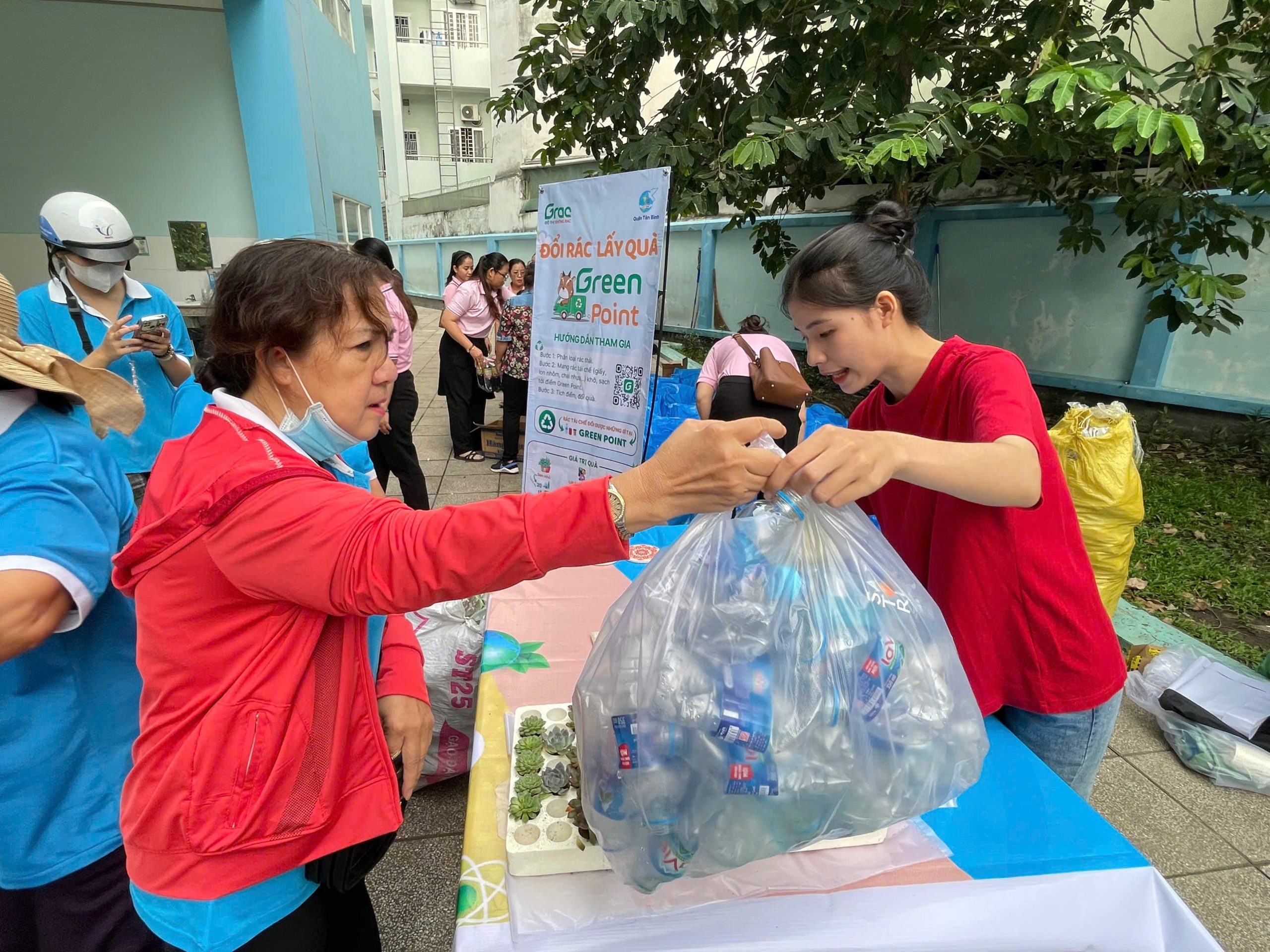
Data at each stage GRAC / Traceability
Every material flow has a starting point.
Quantities are linked to the collection transaction and the waste source from the outset.
- Identification
- Waste source, material type, transaction ID
- Handover
- Time, location, collector
- Quantity
- Recorded quantity and weighing information
- Evidence
- Photos, weighbridge tickets or relevant documents
Origin is established before any figures are aggregated.
Follow every handover.
Each transfer reconciles the quantity dispatched by the sender with the quantity received.
- Linkage
- Batch reference and related collection transactions
- Parties
- Sender, receiver, aggregation point
- Reconciliation
- Quantity dispatched, received and any discrepancy
- Evidence
- Receipts, weighbridge tickets and handover photos
Discrepancies are isolated to the specific handover.
Separate collection from recycling.
Recycling results rely on the receiving facility’s confirmation and documents, kept separate from collection data.
- Facility
- Receiving facility and material batch
- Input
- Quantity, material type, date received
- Reconciliation
- Figures confirmed by the receiving party
- Evidence
- Receipt documents and recycler confirmation
Collection ≠ confirmed recycling.
Reports come with supporting records.
Missing data, discrepancies and suspected duplicates are reviewed before documentation is finalised.
- Scope
- Reporting period, material, geography, programme
- Summary
- Quantities by reconciliation status
- Reference
- Underlying transactions and related documents
- Gaps
- List of missing data and supporting documents
Every reported figure traces back to the underlying transaction and source record.
What you receive: Batch and transaction records · Reconciliation tables · List of documents still required · Periodic reports.
Programme applications: Post-consumer material traceability and reconciliation of recycled-material origin. The data and evidence scope is agreed for each programme.
Discuss your data requirements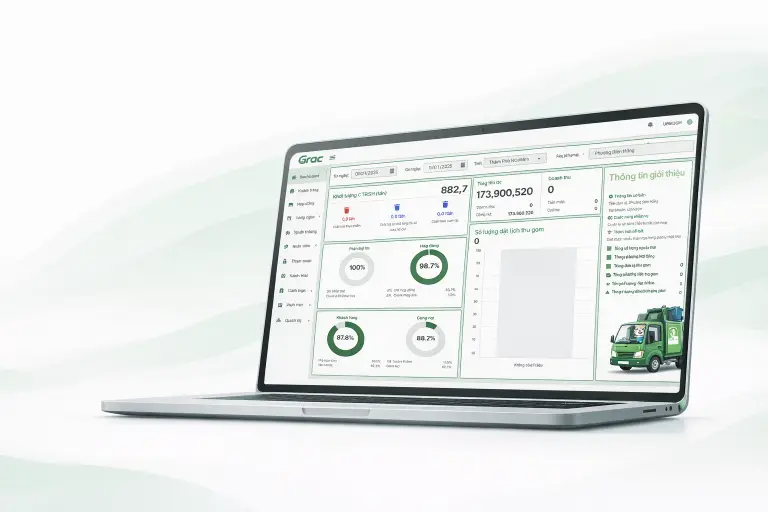
03 / Municipal Waste Management Software
Manage waste generators.
Fees and reporting in one system.
For commune and ward authorities and collection service providers — one shared system, from waste-generator records to fee collection and reporting.
- Manage waste-generator records, service contracts and collection providers.
- Track fee collection, payments and outstanding balances.
- Compile reports and support resident interaction through the GRAC app.
Configured system · Centralised management data · Service and fee reports · User guidance.
Where a material recovery programme is implemented, waste-generator data can connect to the traceability platform within an agreed scope.
Projects in practice
Clear roles.
Real implementation challenges.
Published projects, with the role of GRAC and each participating party stated.

Tan My Ward · Ho Chi Minh City
Tan My Material Recovery Station.
A ward-level model for source separation and recovery of recyclable materials.
- Station management
- People’s Committee of Tan My Ward
- Funding
- Unilever Vietnam
- Construction, traceability & transfer to recycler
- GRAC
GRAC built the station, applies its traceability technology and transfers recovered material to the recycling plant.
Records connect household sorting, collection at the station and transfer to the recycler.
Read the Government News article Vietnamese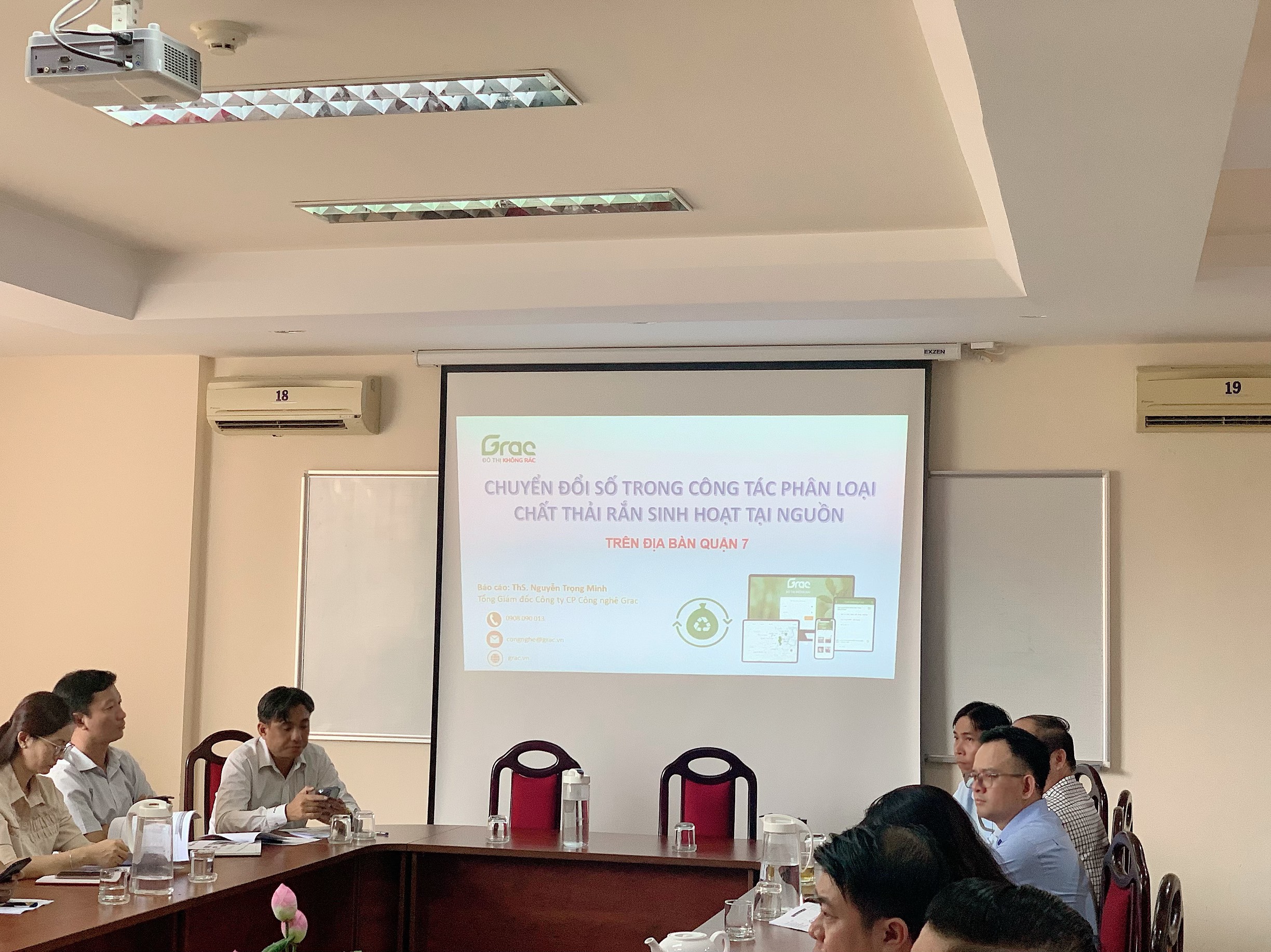
Municipal waste management
Software deployment in former District 7.
Management of waste generators and household waste collection services across the district, Ho Chi Minh City.
- Users
- Local management authorities and collection service providers
- Solution
- Municipal waste management software
- GRAC’s role
- Software provision and user guidance
Digitising waste-generator data and supporting service management and waste-fee payment.
Proof of capability
Every capability has a source you can verify.
Public information from regulators, partners and certification bodies. Company-specific EPR data remains confidential under contract.
Legal
Vietnam’s National EPR Information System
Publicly listed as an organisation authorised by producers to organise the recycling of products and packaging.
Verify at epr.mae.gov.vn VietnameseBrand confirmation
Unilever Vietnam · Tan My Station
The chain from household sorting through collection to transfer to the recycler is recorded and reported through the GRAC app.
Verify at Unilever VietnameseGovernance
Standards and intellectual property
- ISO 9001:2015 · ISO 14001:2015 (VinaCert)
- Software copyright No. 1139/2024/QTG
- GRAC trademark protected in Vietnam
Selected programmes
Corporate and government programmes
Before you choose
Questions to ask
before implementation.
Clarity on roles, data and service scope from the outset.
How are EPR services different from traceability software?
EPR services can include planning and coordinating collection and recycling under a contract. Traceability software links transactions, quantities and documents across the parties involved. You can choose either one or combine both.
Can GRAC work with our existing recycler or network?
We can develop an approach around your existing network. Before implementation is agreed, we assess each party’s ability to provide data, the confirmation process and how the parties will coordinate.
Does the software automatically guarantee EPR compliance?
No. The software supports data and evidence management. It does not replace the assessment of legal obligations, checks on participant eligibility or the review of supporting documents. Service scope and responsibilities are agreed case by case.
Who is the municipal waste management software designed for?
Local management authorities and collection service providers that need to digitise waste-generator records, contracts, fee collection and reporting. Deployment scope follows each organisation’s requirements.
Resources & tools
Understand the solutions before you implement.
Start with GRAC
The right solution.
A clearly defined scope.
We start from your requirements and the data you already have, then propose an implementation approach before any work begins.
How to start
- 01Understand the requirementsOutput: requirements and input data
- 02Agree the approachOutput: proposal and scope of collaboration
- 03Implement and reviewOutput: configured system or project documentation under the agreed scope
Which solution do you need?
Contact GRACShare your requirements to receive a proposed implementation scope.

