03 / Municipal Waste Management
Manage waste services, fees and reporting in one system.
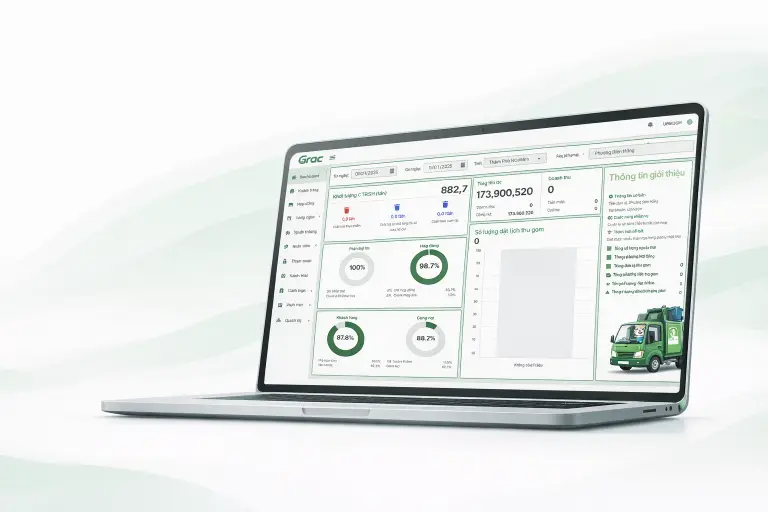
GRAC helps local authorities and collection service providers centralise waste-generator records, service contracts, collection operations, payments and management reporting.
Used in municipal waste-management deployments across Vietnam.
GRAC Municipal SaaS · Waste generators · Services · Payments · Reporting
Operating footprint
Built from real municipal waste operations.
GRAC deployments vary by location and service scope. Features are configured for the operating model of each implementation.
Operating figures reported by GRAC and reflect deployments across different service scopes.
01 / The operating gap
Waste services become difficult to manage when the data sits in separate files.
Municipal waste operations involve waste generators, service providers, contracts, collection schedules, payments, complaints and reporting. When these records are maintained separately, reconciliation and day-to-day management become harder.
Fragmented waste-generator records
Households, businesses and other waste generators may be stored across spreadsheets, paper records or separate databases.
Contracts and fees are difficult to reconcile
Service status, fee schedules, payments and outstanding balances need to remain connected to each waste generator.
Multiple service providers need a shared view
Local authorities need visibility over which organisation serves which area and how service records are maintained.
Reporting takes manual consolidation
Operational and financial information often has to be assembled from multiple sources before it can be reviewed.
02 / Municipal operations
One system for the records behind local waste services.
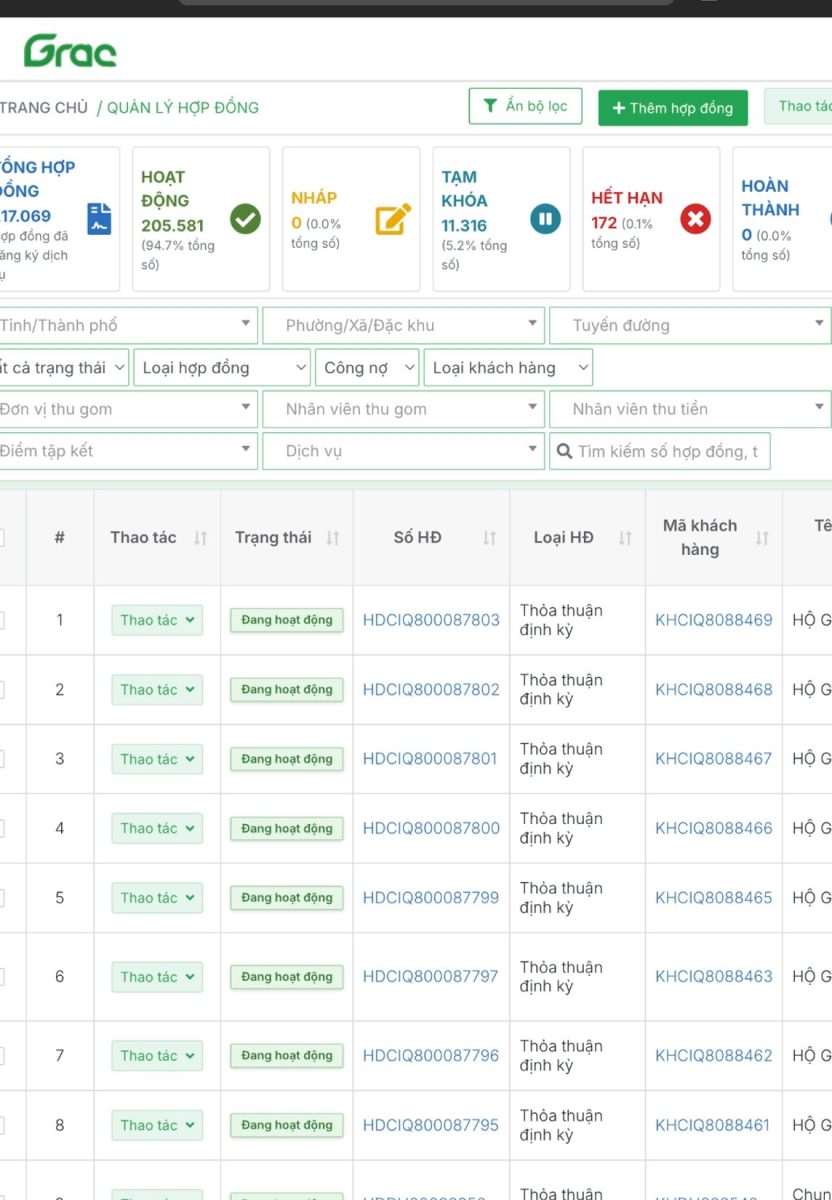
Waste-generator, provider, contract, fee and payment records are kept in one place, so authorities and service providers work from the same information.
Waste-generator registry
Maintain records for households, businesses and other waste-generating premises.
Service contracts
Manage service agreements, status, effective periods and related records.
Collection providers
Maintain service-provider and operating-area information and support role-based access for participating organisations.
Fees & payments
Track service charges, payments and outstanding balances within the configured operating model.
Reporting
Compile operational and financial information for management review and reporting.
Modules are configured according to the deployment scope and local operating model.
03 / Core functions
From waste-generator records to management reporting.
Eight core functions cover the records local waste services depend on. Each deployment includes the functions agreed for its scope.
- 01
Waste-generator management
Centralised records for households, businesses and other waste-generating premises.
- 02
Service contracts
Create and maintain service agreements and their status.
- 03
Collection-service providers
Manage participating providers, operating areas and relevant user roles.
- 04
Waste-service fees
Maintain fee information and link charges to service records.
- 05
Payments & outstanding balances
Record payments and identify accounts requiring follow-up.
- 06
Source segregation
Support records for source-segregation implementation where included in the programme.
- 07
Citizen requests & feedback
Receive and manage service requests or feedback through supported GRAC channels.
- 08
Management reporting
Compile operational, service and financial data for review.
04 / Who uses it
One data layer.
Different operational roles.
Authorities and collection service providers work in the same system, each with access matched to its responsibilities.
Local authorities
Use the system to maintain a consolidated view of:
- Waste generators
- Collection providers
- Service status
- Source segregation
- Service fees
- Payments and outstanding balances
- Citizen feedback
- Management reporting
Configuration reflects the authority’s management responsibilities and available source data.
Collection service providers
Use the system to manage:
- Assigned waste generators
- Service contracts
- Service records
- Fee collection
- Payment status
- Relevant staff access
- Reports provided to the managing authority
Access and functionality are configured according to each organisation’s role.
05 / Citizen services
Connect municipal records with resident interaction.
Where included in the deployment, the GRAC app and digital channels can help residents access waste-service information and interact with service providers.
Resident-facing functions draw on the same waste-generator and service records used by the authority and the service provider.
- Waste-fee lookup
- Supported payment methods
- Collection information
- Bulky-waste or recyclable pickup requests
- Service feedback
- Source-segregation guidance
Available functions depend on the deployment and the channels configured for each locality.
06 / Connected data
Municipal waste data can support material-recovery programmes too.
Municipal management and material traceability serve different purposes, but they can share selected source and operational records.
Where a recovery or source-segregation programme is implemented, GRAC can connect agreed waste-generator and collection data with the material traceability layer.
- 01Waste generator
- 02Collection service
- 03Recovery / segregation activity
- 04Material transaction
- 05Traceability platform
Important: Municipal waste-management records do not automatically become EPR evidence. The traceability scope and supporting records are defined separately for each programme.
Explore Material Traceability07 / Implementation
Start with the operating model,
not with the software configuration.
Each deployment begins with how waste services are actually run today — the data, the organisations involved and the reports that are needed.
- 01
Understand the current process
Review available data, service-provider structure, fee collection and reporting needs.
- 02
Define the data scope
Agree which waste generators, service records, organisations and data fields will be included.
- 03
Configure & migrate
Set up user roles, workflows and agreed source data.
- 04
Train & operate
Train relevant users and review data quality during implementation.
Timeline depends on data readiness, number of participating organisations and deployment scope.
08 / Deployment in practice
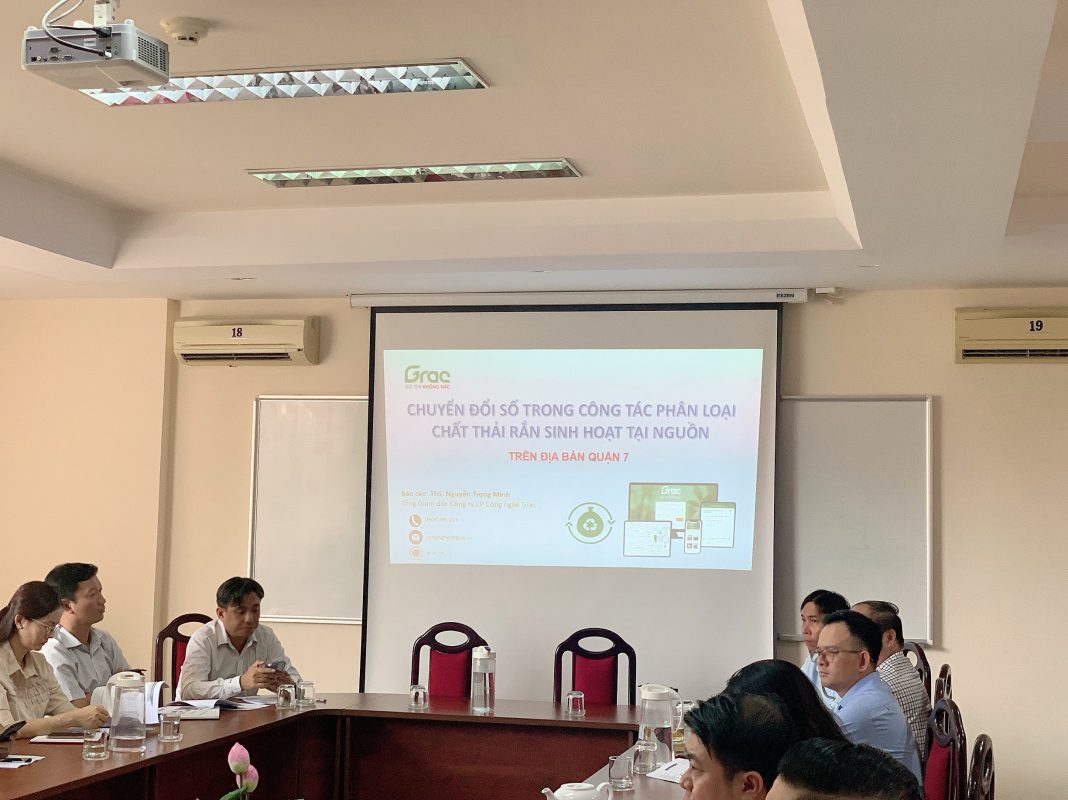
Waste management software introduced in former District 7, Ho Chi Minh City.
Ho Chi Minh City · Deployment introduced in 2023
GRAC provided waste management software and user guidance to support waste-generator records, collection service management and online waste-service payments.
- Users
- Local management authorities and collection service providers
- GRAC’s role
- Software provision and user guidance / training
- Implementation focus
- Digitising waste-generator data and supporting service management and waste-fee payment
The location name reflects the administrative area at the time of deployment.
Read the Deployment Story Vietnamese09 / Deliverables
A configured system and a clearer operating dataset.
What a deployment delivers, within the agreed commercial and data scope.
Configured platform
Modules and user roles set for the agreed deployment scope.
Centralised records
Waste-generator, service-provider and contract records consolidated in the system.
Fee & payment records
Service-charge and payment information available for management review.
Management reports
Operational and financial summaries based on the configured data.
User onboarding
Guidance and training for relevant authority and service-provider users.
10 / FAQ
Frequently asked questions
Roles, scope and data — clarified before deployment.
Who is the software designed for?
Primarily commune and ward authorities and waste collection service providers that need to manage waste-generator records, contracts, service fees, payments and reporting.
Does GRAC replace the responsibilities of local authorities?
No. GRAC provides digital infrastructure and workflow tools. Management responsibilities and regulatory decisions remain with the competent authorities and participating organisations.
Can GRAC work with existing collection service providers?
Yes. The deployment can be configured around the existing service-provider structure, subject to the available data and agreed operating model.
Does every deployment use the same modules?
No. Functions and user access are configured according to the service model, data availability and project scope.
Can residents pay waste-service fees through GRAC?
Supported payment functions can be included where they are configured for the deployment and relevant payment channels are available.
Can municipal waste data connect to material traceability?
Yes, within an agreed programme scope. Selected source and collection records can support a separate material-traceability workflow, but municipal management records do not automatically constitute recycling or EPR evidence.
Is the platform only for Vietnam?
The current deployments and operating references are primarily in Vietnam.
Start with GRAC
Start with your data,
service model and reporting needs.
Tell us how waste services are currently managed in your locality or organisation. GRAC will review the available data and propose an appropriate deployment scope.
How a deployment starts
- 01Share the current processOutput: operating requirements
- 02Define the scopeOutput: modules, users and data requirements
- 03Configure & deployOutput: configured system and implementation plan

